



Alexander Voigt
Widerrufsrecht--------------
Lots und Sammlungen können nicht reklamiert werden. Mit der Abgabe eines Gebotes erkennen Sie unsere AGB’s an.
Sie können Ihre Vertragserklärung innerhalb von 1 Monat ohne Angabe von Gründen in Textform (z. B. als Brief, Fax, E-Mail) oder - wenn Ihnen die Sache vor Fristablauf überlassen wird - auch durch Rücksendung der Sache widerrufen. Die Frist beginnt nach Erhalt dieser Belehrung in Textform, jedoch nicht vor Eingang der Ware beim Empfänger (bei der wiederkehrenden Lieferung gleichartiger Waren nicht vor Eingang der ersten Teillieferung) und auch nicht vor Erfüllung unserer Informationspflichten gemäß Artikel 246 § 2 in Verbindung mit § 1 Absatz 1 und 2 EGBGB sowie unserer Pflichten gemäß § 312g Absatz 1 Satz 1 BGB in Verbindung mit Artikel 246 § 3 EGBGB. Zur Wahrung der Widerrufsfrist genügt die rechtzeitige Absendung des Widerrufs oder der Sache.
Der Widerruf ist zu richten an:
Alexander Voigt
Mittenwalder Str. 42
10961 Berlin
Deutschland
E-Mail: [email protected]
Widerrufsfolgen
---------------
Im Falle eines wirksamen Widerrufs sind die beiderseits empfangenen Leistungen zurückzugewähren und ggf. gezogene Nutzungen (z. B. Zinsen) herauszugeben. Können Sie uns die empfangene Leistung sowie Nutzungen (z.B. Gebrauchsvorteile) nicht oder teilweise nicht oder nur in verschlechtertem Zustand zurückgewähren beziehungsweise herausgeben, müssen Sie uns insoweit Wertersatz leisten. Für die Verschlechterung der Sache und für gezogene Nutzungen müssen Sie Wertersatz nur leisten, soweit die Nutzungen oder die Verschlechterung auf einen Umgang mit der Sache zurückzuführen ist, der über die Prüfung der Eigenschaften und der Funktionsweise hinausgeht. Unter "Prüfung der Eigenschaften und der Funktionsweise" versteht man das Testen und Ausprobieren der jeweiligen Ware, wie es etwa im Ladengeschäft möglich und üblich ist. Paketversandfähige Sachen sind auf unsere Gefahr zurückzusenden. Sie haben die regelmäßigen Kosten der Rücksendung zu tragen, wenn die gelieferte Ware der bestellten entspricht und wenn der Preis der zurückzusendenden Sache einen Betrag von 40 Euro nicht übersteigt oder wenn Sie bei einem höheren Preis der Sache zum Zeitpunkt des Widerrufs noch nicht die Gegenleistung oder eine vertraglich vereinbarte Teilzahlung erbracht haben. Anderenfalls ist die Rücksendung für Sie kostenfrei. Nicht paketversandfähige Sachen werden bei Ihnen abgeholt. Verpflichtungen zur Erstattung von Zahlungen müssen innerhalb von 30 Tagen erfüllt werden. Die Frist beginnt für Sie mit der Absendung Ihrer Widerrufserklärung oder der Sache, für uns mit deren Empfang.


In addition to the Hammer Price Buyers must pay a Buyer's Premium rated to 20% of the final Hammer price of each lot, shipping charges if needed and a Czech V.A.T. currently rated at 21%. There is no V.A.T. to pay for buyers, who receive their goods outside the EC, and also for dealers within the ...more
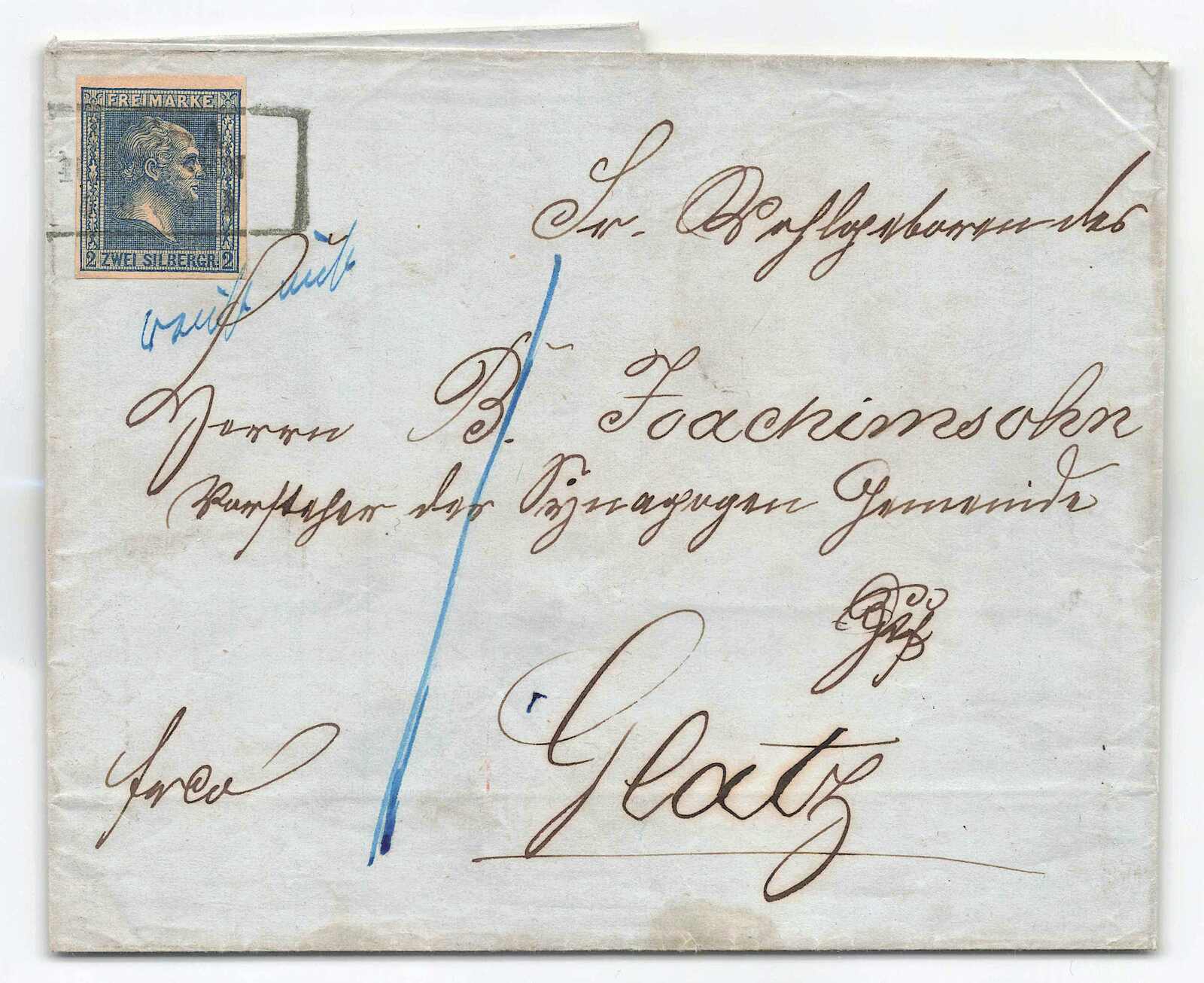
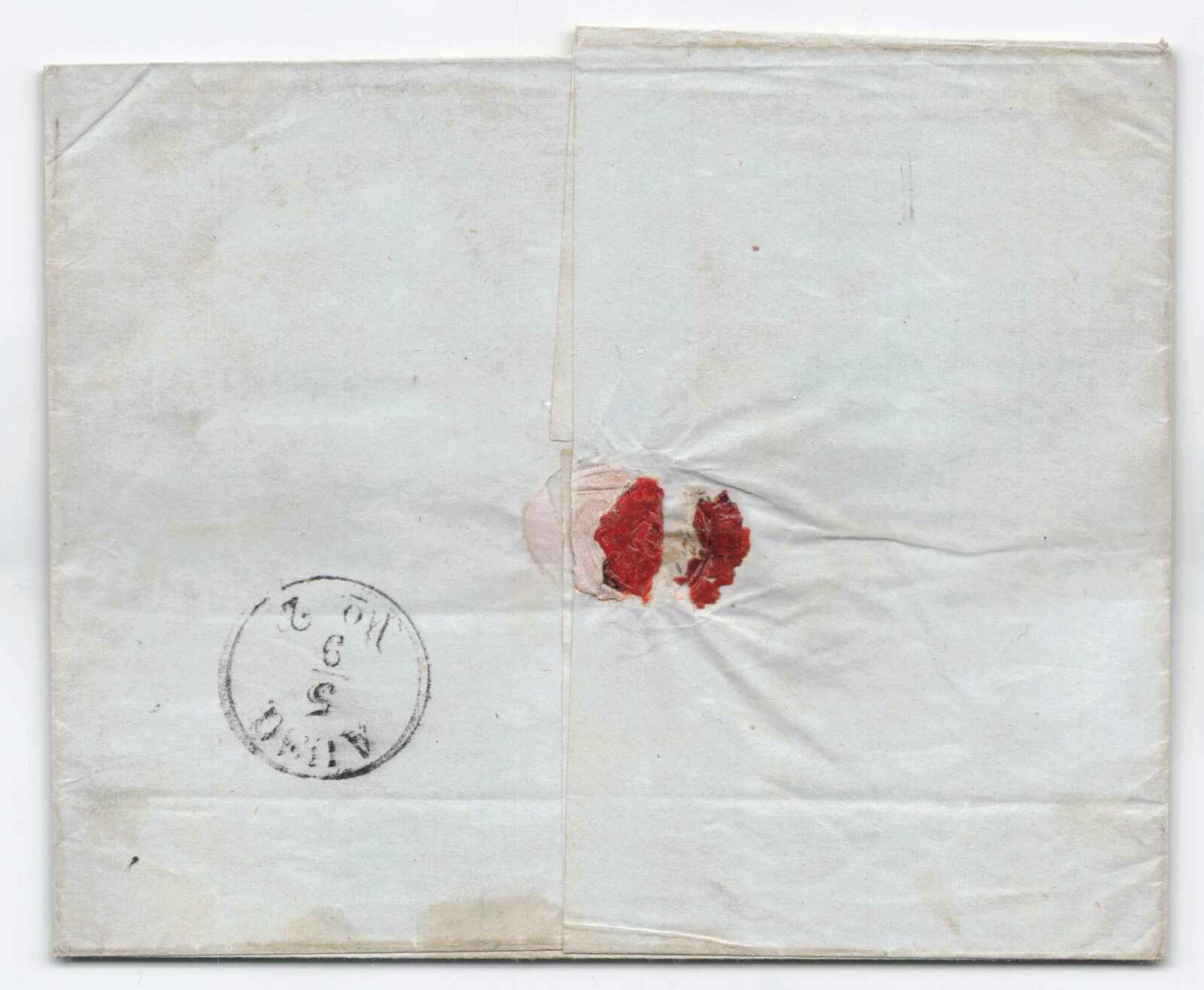
Lot 1884 Religion, Judaism, Judaica

- Michel 11
JUDAICA: 1858, 2 Sgr. blau,, Friedrich Wilhelm IV., voll- bis
breitrandig, mittig mit R3 "LISSA, REG.BEZ. POSEN, 4 9" (heute:
Leszno, Polen; Feuser 1972) und handschriftlichem Nachtaxe-Vermerk
"reicht nicht" bzw. "1" auf der Faltbriefhülle an Herrn B.
Joachimsohn, Vorsteher der Synagogen-Gemeinde in Glatz (heute:
Klodzko, Polen). SOCIAL PHILATELY: Juden in Glatz wurden erstmals
um die Mitte des 14.Jahrhunderts im ältesten Glatzer Stadtbuch
erwähnt, jedoch wurden sie 1492 vollständig aus Glatz vertrieben.
Bis in die Mitte des 18.Jahrhunderts waren dauerhaft keine Juden in
Glatz ansässig, ausgenommen wenige „Münzjuden“, die als
Silberlieferanten tätig waren, sowie solche, die die Glatzer
Jahrmärkte aufsuchten. Seit 1814 wuchs allmählich die Zahl der
Juden in Glatz; die meisten kamen aus der Stadt Zülz. Eine jüdische
Kultusgemeinde gründete sich um 1825. Diese erwarb damals einen
eigenen Begräbnisplatz; Gottesdienste wurden zunächst in
angemieteten Beträumen abgehalten, ehe im September 1885 ein in
rotem Backstein gefertigter Synagogenneubau – entworfen vom
Architekten Albert Grau – an der Grünen Straße eingeweiht werden
konnte.
Automatically generated translation:
Judeica: 1858, 2 Sgr. Blue, Friedrich Wilhelm IV., having full to wide margins, centered with three lines frame cancel "Leszno, government district POSEN, 4 9" (today: Leszno, Poland; Feuser 1972) and handwritten postage due notation "passes not" respectively "1" on the folded letter cover to Mr. B. Joachimsohn, directorate the Synagogue-community in Glatz (today: Klodzko, Poland). SOCIAL PHILATELY: Jews in Glatz were for the first time about the middle ground of the 14. Century in the oldest Glatzer city book mentions, however were they 1492 complete from Glatz expelled. Until the middle of the 18. Century were permanent no Jews in Glatz domiciled, barring few "Münzjuden", which silver suppliers working were, as well those, the Glatzer fairs aufsuchten. Since 1814 growth by degrees the number the Jews in Glatz; most came from of the city Zülz. A Jewish religious community founded be about 1825. These acquired at that time a characteristic burial ground; divine services were first in rented dreaming prevented, marriage in the September 1885 an in red bakestone more manufactured new synagogue building - designed from architects Albert grey - at the green street inaugurated become could.