




 (3)
(3)
Categories

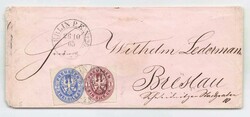
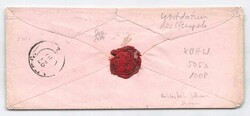
LETZTAGSDATUM / JUDAICA / JÜDISCHER ADEL: 1865, 1 Sgr. ...more
LETZTAGSDATUM / JUDAICA / JÜDISCHER ADEL: 1865, 1 Sgr. rosa
(oxydiert), 2 Sgr. blau, Wappen, mit zartem und nochmals
nebengesetztem nachverwendeten Vorphila-K2 "BERLIN P.E. No 25., 26
10" (KBHW 5050, Feuser 259) auf Briefumschlag an Wilhelm Ledermann
in Breslau (heute: Wroclaw, Polen). Der hier vorliegende Stempel
zeigt sein LETZTAGSDATUM und wertet im KBHW 100 Punkte. Social
Philately: Der jüdische Kaufmann Wilhelm Ledermann aus Breslau
wurde 1883 in den Adelsstand erhoben. Vom einfachen Kaufmann und
Prokuristen arbeitete er sich hoch bis zum Bankier und
Vorstandsmitglied der Schlesischen Vereinsbank in Berlin und
Breslau. Sein Beispiel zeigt, wie jüdischer Mitbürger während des
Kaiserreichs bis in die höchsten Gesellschaftsschichten aufsteigen
konnten.
Automatically generated translation:
LETZTAGSDATUM / Judeica / Jewish nobility: 1865, 1 Sgr. Rose (oxidized), 2 Sgr. Blue, coat of arms, with tenderly and once again alongside still used pre philately two ring cancel "BERLIN P. E. No 25, 26 10" (KBHW 5050, Feuser 259) on envelope at Wilhelm Ledermann in Wroclaw (today: Wroclaw, Poland). The here existing cancel shows be LETZTAGSDATUM and appraises in the KBHW 100 points. Social Philately: the Jewish merchant Wilhelm Ledermann from Wroclaw was 1883 in the nobility charged. From plain merchant and authorized signatories worked he be high to to the banker and board member the Silesian United bank in Berlin and Wroclaw. Be example shows, like Jewish fellow citizen during of the Empire until the highest social classes ascend could.
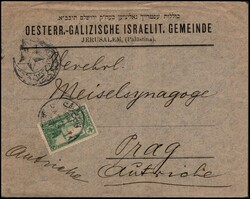
1914 - Â(Judaica) Wartime cover of letter sent “Jewish ...more
1914 - Â(Judaica) Wartime cover of letter sent “Jewish Community
of Galicia, Jerusalem†to Prague. Printed Matter" postage!
Turkish stamp of Â10 para. ÂUS$
![Mail Auction]](/en/images/philasearch/ico_mailauction.png "Mail Auction")
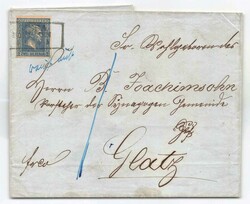
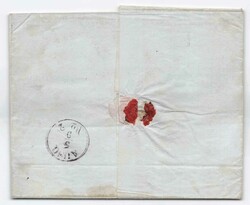
JUDAICA: 1858, 2 Sgr. blau,, Friedrich Wilhelm IV., voll- ...more
JUDAICA: 1858, 2 Sgr. blau,, Friedrich Wilhelm IV., voll- bis
breitrandig, mittig mit R3 "LISSA, REG.BEZ. POSEN, 4 9" (heute:
Leszno, Polen; Feuser 1972) und handschriftlichem Nachtaxe-Vermerk
"reicht nicht" bzw. "1" auf der Faltbriefhülle an Herrn B.
Joachimsohn, Vorsteher der Synagogen-Gemeinde in Glatz (heute:
Klodzko, Polen). SOCIAL PHILATELY: Juden in Glatz wurden erstmals
um die Mitte des 14.Jahrhunderts im ältesten Glatzer Stadtbuch
erwähnt, jedoch wurden sie 1492 vollständig aus Glatz vertrieben.
Bis in die Mitte des 18.Jahrhunderts waren dauerhaft keine Juden in
Glatz ansässig, ausgenommen wenige „Münzjuden“, die als
Silberlieferanten tätig waren, sowie solche, die die Glatzer
Jahrmärkte aufsuchten. Seit 1814 wuchs allmählich die Zahl der
Juden in Glatz; die meisten kamen aus der Stadt Zülz. Eine jüdische
Kultusgemeinde gründete sich um 1825. Diese erwarb damals einen
eigenen Begräbnisplatz; Gottesdienste wurden zunächst in
angemieteten Beträumen abgehalten, ehe im September 1885 ein in
rotem Backstein gefertigter Synagogenneubau – entworfen vom
Architekten Albert Grau – an der Grünen Straße eingeweiht werden
konnte.
Automatically generated translation:
Judeica: 1858, 2 Sgr. Blue, Friedrich Wilhelm IV., having full to wide margins, centered with three lines frame cancel "Leszno, government district POSEN, 4 9" (today: Leszno, Poland; Feuser 1972) and handwritten postage due notation "passes not" respectively "1" on the folded letter cover to Mr. B. Joachimsohn, directorate the Synagogue-community in Glatz (today: Klodzko, Poland). SOCIAL PHILATELY: Jews in Glatz were for the first time about the middle ground of the 14. Century in the oldest Glatzer city book mentions, however were they 1492 complete from Glatz expelled. Until the middle of the 18. Century were permanent no Jews in Glatz domiciled, barring few "Münzjuden", which silver suppliers working were, as well those, the Glatzer fairs aufsuchten. Since 1814 growth by degrees the number the Jews in Glatz; most came from of the city Zülz. A Jewish religious community founded be about 1825. These acquired at that time a characteristic burial ground; divine services were first in rented dreaming prevented, marriage in the September 1885 an in red bakestone more manufactured new synagogue building - designed from architects Albert grey - at the green street inaugurated become could.
Alexander Voigt Briefmarkenhandel
Lot 1908
Mi
16, 17a
Automatically generated translation:
LETZTAGSDATUM / Judeica / Jewish nobility: 1865, 1 Sgr. Rose (oxidized), 2 Sgr. Blue, coat of arms, with tenderly and once again alongside still used pre philately two ring cancel "BERLIN P. E. No 25, 26 10" (KBHW 5050, Feuser 259) on envelope at Wilhelm Ledermann in Wroclaw (today: Wroclaw, Poland). The here existing cancel shows be LETZTAGSDATUM and appraises in the KBHW 100 points. Social Philately: the Jewish merchant Wilhelm Ledermann from Wroclaw was 1883 in the nobility charged. From plain merchant and authorized signatories worked he be high to to the banker and board member the Silesian United bank in Berlin and Wroclaw. Be example shows, like Jewish fellow citizen during of the Empire until the highest social classes ascend could.
ONLINE LIVE
50.00 EUR
Sold
Romano House of Stamps Sales Ltd.
Lot 20
70.00 USD
(app. 59 EUR)
03/12/2026 22:00 CET
(app. 59 EUR)
Alexander Voigt Briefmarkenhandel
Lot 1884
Mi
11
Automatically generated translation:
Judeica: 1858, 2 Sgr. Blue, Friedrich Wilhelm IV., having full to wide margins, centered with three lines frame cancel "Leszno, government district POSEN, 4 9" (today: Leszno, Poland; Feuser 1972) and handwritten postage due notation "passes not" respectively "1" on the folded letter cover to Mr. B. Joachimsohn, directorate the Synagogue-community in Glatz (today: Klodzko, Poland). SOCIAL PHILATELY: Jews in Glatz were for the first time about the middle ground of the 14. Century in the oldest Glatzer city book mentions, however were they 1492 complete from Glatz expelled. Until the middle of the 18. Century were permanent no Jews in Glatz domiciled, barring few "Münzjuden", which silver suppliers working were, as well those, the Glatzer fairs aufsuchten. Since 1814 growth by degrees the number the Jews in Glatz; most came from of the city Zülz. A Jewish religious community founded be about 1825. These acquired at that time a characteristic burial ground; divine services were first in rented dreaming prevented, marriage in the September 1885 an in red bakestone more manufactured new synagogue building - designed from architects Albert grey - at the green street inaugurated become could.
ONLINE LIVE
100.00 EUR
02/28/2026 CET
Current Time: Thursday February 05th 2026 - 16:23 MET